

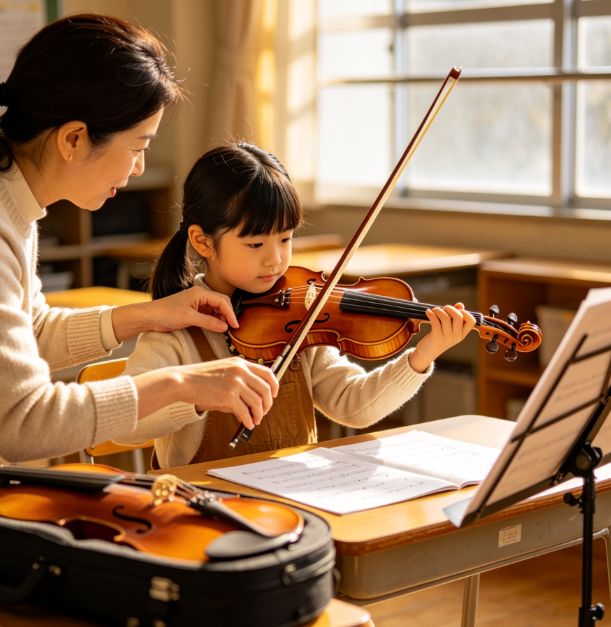
Authentic images consistently outperform overly staged visuals when people evaluate local businesses online. Research from Google shows that high-quality, genuine business photos help customers better understand what to expect before visiting, while studies published by Nielsen Norman Group have found that realistic imagery builds greater trust than generic stock photography. Music businesses can benefit from this approach by presenting instruments where they naturally belong, in classrooms, rehearsal halls, lessons, and community performances.
One practical example is violin rental Spicewood, where localized lifestyle photography can help families recognize familiar learning spaces and community settings instead of seeing only isolated instrument photos against plain backgrounds. Images that reflect actual music education experiences create stronger local connections while helping prospective students understand how instruments fit into everyday learning.
The Challenge with Traditional Product Photography
Many music businesses rely on catalog-style photographs that focus entirely on the instrument. While these images remain useful for showing craftsmanship and condition, they rarely communicate how the instrument becomes part of a student’s musical journey.
Parents often want to picture their child taking lessons, participating in rehearsals, or performing with classmates. Teachers may want to see comfortable teaching environments, and adult learners frequently look for welcoming community settings before choosing a music provider. Lifestyle photography bridges this gap by adding meaningful context.
1. Photograph Real Lessons with Permission
The best learning photographs happen during actual lessons rather than staged sessions. Students naturally display concentration, curiosity, and progress while working with instructors.
Privacy should always come first. Experts at Common Sense Media recommend obtaining written permission before photographing children for marketing purposes and clearly explaining how images will be used. Consent forms protect both families and businesses while establishing trust.
2. Show Teachers Interacting with Students
People often choose a music business because of its instructors rather than its inventory alone. Images showing teachers adjusting posture, demonstrating bow technique, or offering encouragement tell a more complete story than portraits alone.
Natural interactions communicate patience, professionalism, and personalized instruction. Small moments often become the most memorable photographs because they reflect genuine learning experiences.
3. Feature Real Practice Spaces
Practice rooms deserve attention because they shape the learning experience. Comfortable seating, organized music stands, good lighting, and clean surroundings reassure prospective families that lessons take place in an inviting environment.
Reports from NAfME, The National Association for Music Education, emphasize that supportive learning environments contribute to student engagement and long-term participation in music education. Photographs can reinforce these qualities visually.
4. Capture Community Performances
Recitals, school concerts, and local festivals demonstrate how music education extends beyond private lessons.
Wide-angle photographs showing performers, supportive audiences, and community venues highlight the social side of music learning. These images illustrate progress, confidence, and achievement that product photography cannot convey.
Care should be taken to avoid distracting backgrounds while keeping the atmosphere authentic.
5. Include Everyday Preparation Moments
Some of the strongest images happen before performances begin. Students tuning instruments, arranging sheet music, discussing pieces with instructors, or quietly preparing backstage communicate anticipation and dedication.
These behind-the-scenes moments often feel more relatable because they reflect experiences shared by musicians of every skill level.
6. Balance Instruments with Human Stories
An instrument remains the subject, but the person using it provides context. Rather than filling every frame with close-up product shots, combine detailed photographs of craftsmanship with wider images showing musicians actively learning.
This balance helps visitors understand both the quality of the instrument and its practical purpose within music education.
7. Use Natural Lighting Whenever Possible
Natural light creates softer colors and more realistic skin tones than excessive flash photography. Window lighting during daytime lessons often produces warm, welcoming images that reflect genuine classroom conditions.
Photography guidance published by Adobe notes that natural lighting frequently produces more balanced and believable portraits while preserving authentic atmosphere.
8. Represent Different Ages and Skill Levels
Music education serves children, teenagers, college students, adults, and retirees. Marketing images should reflect that diversity.
Showing learners from different backgrounds demonstrates that music is accessible throughout life. It also helps prospective students identify with people who share similar goals and experience levels.
9. Keep Rehearsal Spaces Realistic
Perfectly staged rooms can feel artificial. Small details such as open music books, instrument cases, pencils, and rehearsal notes create believable scenes without appearing cluttered.
Authenticity matters more than perfection. Minor signs of active learning often strengthen visual storytelling.
10. Build a Consistent Local Visual Identity
Local businesses become more recognizable when photographs consistently feature familiar neighborhoods, schools, performance venues, or community events. These images distinguish a business from competitors using generic stock photography.
Research from BrightLocal indicates that consumers increasingly evaluate businesses based on online presence before making contact. Businesses looking to strengthen their visual branding can learn valuable strategies from building a strong photography presence through social proof and visibility, which complements the idea of using authentic local imagery to establish credibility and lasting community recognition.
Practical Tips for Protecting Privacy
- Always obtain written photo consent before publishing identifiable individuals.
- Avoid displaying sensitive student information or school records.
- Respect requests from families who prefer not to appear in marketing materials.
- Review event photography policies before photographing concerts or school activities.
- Store image permissions alongside photo archives for future reference.
Conclusion
Lifestyle photography helps music businesses tell richer stories than traditional product images alone. Students learning new skills, teachers providing guidance, rehearsal rooms filled with activity, and community performances all illustrate the real value of music education. Authentic photographs help families understand the learning experience before they ever visit.
As digital marketing continues to evolve, realistic local imagery will likely become even more important for music businesses seeking to communicate trust and community involvement. Businesses that thoughtfully document genuine educational experiences, while respecting privacy and maintaining high photographic standards, can create visual libraries that remain meaningful for years to come.


